Revelation 2–3
From Persecution to Politics: The Rise of the Imperial Church
(A Story Told in Three Voices)
Scripture Anchor: Revelation 2–3
I. The Widow in the Catacombs
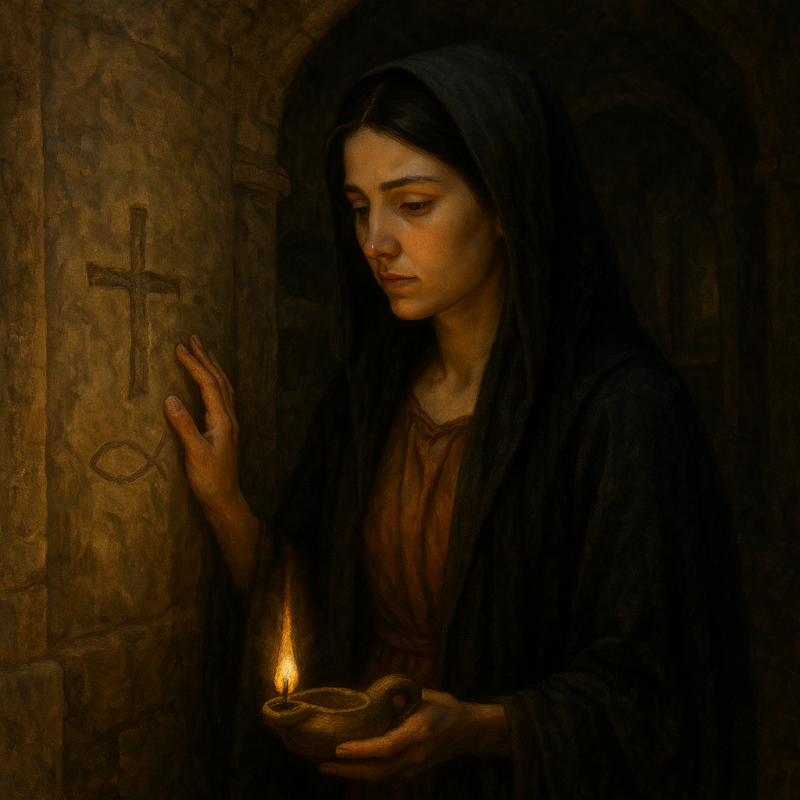
The air is damp and heavy with oil smoke. Walking down the stone path, I trace my fingers across the symbols carved in the wall: a fish, a cross, a name half-worn by time. My husband’s bones rest somewhere behind these walls. They said his death was a victory, that heaven rejoiced when Rome burned his body and could not touch his soul.
I come here not to mourn, but to remember. To breathe the faith that costs something.
Word has spread that even the emperor himself has seen a vision of the cross and made peace with our faith. Soldiers no longer raid our gatherings, dragging our family away to be tortured. Markets no longer whisper our names in fear. Gone are the days when "The Way" is considered a societal outcast.
The catacombs are quiet now, almost too quiet. Often it feels like a dream, and I will wake up soon. Freedom feels strange on the tongue when your prayers were born in whispers. I wonder if we will still know His power when we no longer bleed for His name?
The oil in my lamp trembles as I pray: “Lord, don’t let comfort dull the edge of conviction. If I must choose between peace and purity, keep me restless for You.”

III. The Elder of the Hidden Church
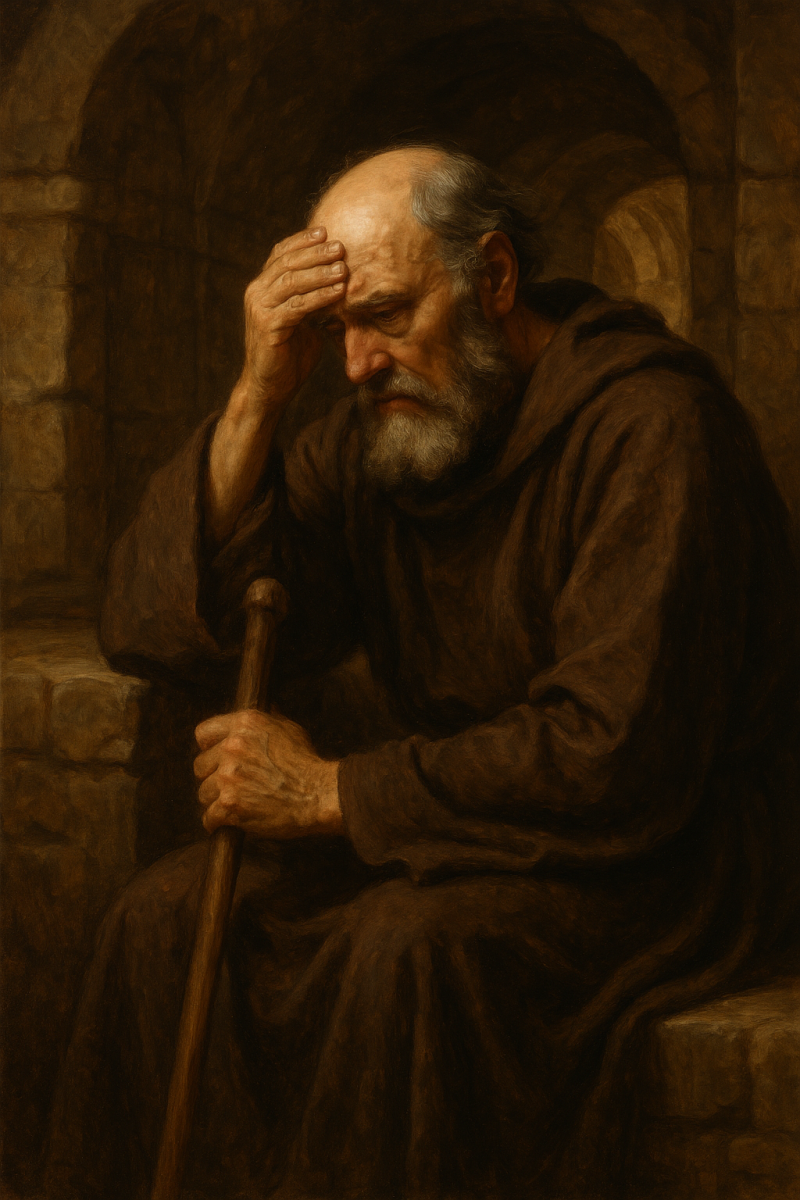
The meetings are larger now. No longer hidden, no longer hungry. Bread is abundant, and so are opinions. Councils gather to debate what the Spirit already made plain in our hearts when we still lived underground.
I remember the faces of those who prayed until their tears turned to dust. Their faith was the kind that needed no throne. Now, when I speak of holiness, the young ones roll their eyes. “The emperor favors us,” they say. “Why fear corruption when we are free?” Free?
Freedom without fire is not freedom — it’s drift.
I walk through the new basilica, its ceilings high and echoing, and I miss the sound of whispered songs in the dark. The candles here burn brighter, but the hearts seem dimmer. Revelation’s warning burns in me like an old wound: “You have a name that you are alive, but you are dead.”
So I pray, with calloused hands lifted in a palace of marble: “God of the catacombs, do not let Your Church forget how to bleed. Teach us again that love is stronger than empire.”
The empire rose, and so did the Church — outwardly. But within, the tremor of compromise began.
History remembers Constantine’s cross in the sky — few remember the quiet tears of those who felt the tremor in their spirit.
I hope you enjoy the music. I used AI to create it.
"Remember the Catacombs.
Remember the fire that once made faith costly.
Remember that He came not to crown you with gold, but with grace.
Because when the cross becomes a throne, we lose both."
II. The Soldier of the Emperor
They call it a holy empire now. I wear a cross on my banner instead of the eagle. I was raised to obey orders, and now my orders say I fight for Christ.
But I never met this Christ. I only know the smell of iron and the weight of victory. When I march under the sign of the cross, I wonder — do I serve heaven, or just another emperor in holy clothes?
We burned temples yesterday, “purging idols,” the bishop said. Yet the faces of the women we displaced haunt me. Their gods fell, and I was the hammer. If the cross was once carried by the condemned, how did it become a weapon for conquest?
I stare at the wooden emblem carved on my shield. The edges are gold now — heavy, shining. Somewhere beneath that gold, I imagine the rough grain that once cut into a man’s shoulders as He stumbled toward Calvary.
And I whisper what I dare not say aloud: “If this is victory, Lord, teach me again what it means to lose for Your sake.”
"They feasted at the table of acceptance, never stopping to ask whether this feast was theirs to eat."
Because not all victories are holy.
The Church That Forgot Why He Came
It seems as though the Church learned who Jesus is — but failed to learn why He came.
When persecution ceased and favor came, believers rejoiced at their new freedom. Yet freedom, unexamined, is often the first chain we willingly clasp. They feasted at the table of acceptance, never stopping to ask whether this feast was theirs to eat.
They learned His name but forgot His nature. They proclaimed His cross but neglected His cause.
History is not silent about this pattern — it echoes all the way back to the wilderness. Moses led a people whose hearts were as stubborn as the desert they wandered through. God delivered them with signs and wonders, parted seas and shattered empires, yet they still longed for Egypt’s comfort more than Canaan’s calling. Each time God set them free, they mistook freedom for permission.
The Church of the fourth century was no different. Like Israel at Sinai, they traded intimacy for institution. They wanted a kingdom they could see more than a King they could serve.
Every page of Jewish history hums with the same refrain: a faithful God pursuing a forgetful people. He calls them His bride, rescues them, restores them — and at the first breath of ease, they drift.
Ease has always been the silent assassin of devotion. When persecution ends, the test begins. For the God who once met His people in caves, deserts, and catacombs does not dwell in marble halls — He dwells in contrite hearts. And the moment comfort replaces covenant, we lose the thread of redemption’s story.
The Church knew His power but forgot His purpose: not to crown the strong, but to heal the broken; not to build an empire, but to birth a Kingdom not of this world.
The Elder’s Reflection: The Drift of Ease
I have lived long enough to see what peace can do to faith.
Fire once proved us. Fear once purified us.
Now comfort has come, and I fear it more than Caesar’s sword.
I see the young ones gathering in grand halls, their robes bright, their words eloquent. They quote the prophets but have never felt the ache that made those words holy. They speak of glory but forget the blood that birthed it.
In my youth, we whispered prayers in the dark, knowing every “Amen” could be our last. We were poor, but we were pure. Our gatherings were small, but our love was vast. We owned little, yet we possessed everything that mattered — because we had Him.
Now I watch as the Church stands tall beside emperors. Their crosses gleam with gold instead of blood. Their altars tower where our tables once trembled with fear and faith.
And though the crowds grow louder, the Presence feels further.
They call it victory — I call it a test.
Because every time the people of God have found comfort, they’ve also found forgetfulness.
It was true for Israel, it is true for us.
The moment manna turns to feasting, gratitude turns to pride.
The moment God gives rest, we mistake it for arrival.
He has always been a pursuing Husband — patient, faithful, merciful — whispering through prophets, through exile, through loss, through the breaking of every false altar:
“I am here. You are Mine. Do not forget Me.”
But we forget. We build monuments where intimacy once was. We trade revelation for ritual, encounter for empire.
I am old now, but I see it clearly:
If the Church ever forgets that Jesus came not to make us powerful, but to make us pure — not to lift us above the world, but to call us out of it — then history will repeat its grief again.
The wilderness always waits for a wandering heart.
So I write these words for whoever will read them generations from now — when the Church grows rich again, when her altars shine brighter than her prayers:
Remember the Catacombs.
Remember the fire that once made faith costly.
Remember that He came not to crown you with gold, but with grace.
Because when the cross becomes a throne, we lose both.
Turn Our Hearts Back to You
Father,
turn our hearts back to You.
Remind us of the love we once held so deeply — the love that burned brighter than fear, stronger than distraction.
Open the eyes of our spirit so we can see the unseen forces that keep us from seeking You fully.
Restore in us a holy desperation for Your presence — one the enemy cannot dull with noise or comfort.
Help us remember, Lord, that our struggle is not against flesh and blood,
but against the powers of darkness working to distance us from Your will.
Expose every shadow that stands between our hearts and Yours.
We need You now more than ever, Father.
Ground us in Your holiness until Your presence is our steady place.
Renew us daily — body, mind, and spirit.
Teach us to lay aside every idol, every addiction, every selfish ambition that steals our affection from You.
Prepare us for the battles ahead so that we do not grow weary or faint in the hour of trial.
Give us the perseverance You promised in Your Word,
and condition us to wear the spiritual armor You have already prepared for Your soldiers.
Father, teach us to pursue You at all cost —
to forsake anything that competes for our devotion.
Let no comfort, no ambition, and not even our deepest love for family come between us and You.
We surrender all to You —
our plans, our fears, our comfort, our pride.
Turn our hearts back, Lord.
Make us Yours again — fully, freely, and forever.
Amen.
Add comment
Comments